


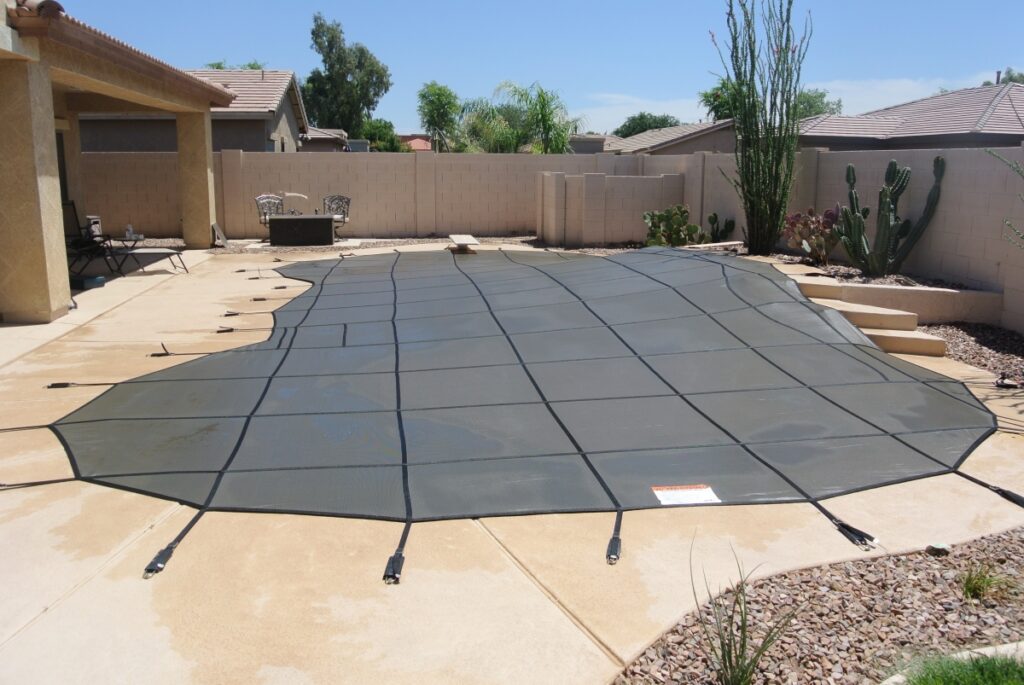
The swims are getting less frequent, and you’re starting to think about covering the pool.
Maybe you want to keep leaves out. Maybe you’re trying to hold onto a little warmth. Or maybe you want an added layer of protection while the pool isn’t being used.
Those are different goals—and not every pool cover serves the same purpose.
Before you buy a cover or pull last year’s out of storage, it’s worth knowing exactly what you’re putting over the water.
A Covered Pool Isn’t Automatically a Secured Pool
“Pool cover” is a broad description.
A floating solar blanket, a cover intended to keep debris out, and a purpose-built safety cover can look like solutions to the same problem. They aren’t interchangeable.
Floating solar covers and ordinary winter covers are not safety covers. They should never be relied on to prevent children from entering the water. The American Academy of Pediatrics warns that floating covers can conceal a child who slips underneath them.
If safety is your goal, ask specifically about a safety cover rather than assuming any product stretched across the pool will do.
Start With the Job You Need It to Do
Before comparing products, ask yourself:
- Am I primarily trying to reduce pool maintenance?
- Am I trying to retain heat?
- Am I looking for an additional safety barrier?
- How often will we uncover the pool?
- Who will be responsible for securing it afterward?
Being clear about your priorities helps you choose a product that fits your household instead of buying something that only looks right in a photo.
If a cover is being represented as a safety cover, ask for documentation showing the applicable safety standard it meets and instructions for proper use.
Installation and Everyday Use Matter
A safety product needs to fit the pool and be used as designed.
Ask your installer to explain how the cover is secured, how to recognize damage, and what to do if hardware becomes loose or a component stops working.
Make sure anyone responsible for the pool knows the routine. A cover that’s difficult for your household to operate deserves a conversation before installation—not after.
And don’t treat a safety cover as a place to walk, play, or store backyard items.
Keep Your Pool Fence Working, Too
Adding a cover is a good time to review the rest of your pool-safety setup.
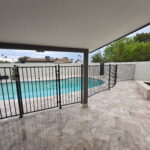
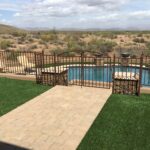
Check that the pool gate closes and latches on its own. Keep it closed rather than propping it open for convenience. If you have removable mesh fencing, continue using it as intended when the pool isn’t in use.
Pool Safely recommends multiple layers of protection, including appropriate barriers, covers, alarms, and close supervision. No single product replaces an adult actively watching children around water.
Plan for the Backyard You’ll Still Be Using
Even when swimming slows down, the backyard may still be where you eat dinner, entertain, or let the kids play.
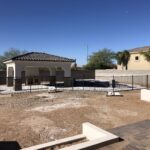
That makes this a useful time to look at how your pool is separated from the rest of the space. Think about visitors who don’t know the layout, children arriving for holiday gatherings, and doors that lead outside.
The question is bigger than whether the water is covered. It’s whether your overall setup helps restrict unintended access.
Get Help Choosing the Right Protection
Fence Pros of Arizona offers professionally installed pool safety covers, mesh pool fences, and iron pool fences for Valley homeowners.
We’ll help you discuss your pool layout, how you use the backyard, and the options that fit your needs.
Call (623) 209-8505 or visit FenceProsArizona.com to request an estimate before putting your pool on the back burner for the season.