

You’ve picked the pavers. You’re comparing turf samples. There’s a spot marked out for the grill, and you can already picture everyone gathered around the new patio.
Then someone asks, “Where is the pool fence going?”
That question deserves a place near the beginning of your backyard project. If cooler weather has you planning an outdoor upgrade in the Phoenix Valley, coordinating your pool fence with the rest of the work can help you avoid awkward layouts and unnecessary changes later.
Start With How You Want to Use the Yard
Before settling on a fence line, think about everyday life outside.
Where will the kids play? How will guests reach the seating area? Can you walk from the back door to the grill without entering the pool enclosure?
Sketch out the main spaces you want: dining, lounging, play areas, landscaping, and pool access. Then have your fence installer review the layout alongside your landscape or hardscape contractor.
The goal is a backyard that feels comfortable to use while keeping the pool barrier’s purpose central to the design.
What’s Under the Pavers Matters
A finished patio can look solid without providing the same support as a concrete slab.
For example, Life Saver’s Pool Fence DIY installation guidance identifies pavers laid over sand or crushed stone as an unstable surface requiring a different installation approach from ordinary concrete. That illustrates why your installer needs to understand the surface and what supports it before choosing an anchoring method. The correct approach depends on the fence system and site conditions.
Before the hardscape work begins, ask:
- What surface will support each section of fence?
- Does the proposed installation need additional preparation?
- Who will coordinate that work?
- When should the fence installation happen?
You don’t need to solve the technical details yourself. You do want everyone working from the same plan.
Give the Gate Its Own Space
A gate location that looks good on a drawing may feel awkward once the dining chairs, grill, and planters arrive.
Consider the walking route, the gate’s swing, and the finished surface beneath it. Leave room for the gate to operate without furniture or landscaping getting in the way.
The U.S. Consumer Product Safety Commission’s Pool Safely guidance recommends pool gates that open away from the pool and are self-closing and self-latching. Have your installer confirm the requirements that apply in your municipality and to your project.
Plan for the Construction Period, Too
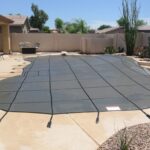
If your remodel involves removing an existing pool fence, discuss how pool access will remain restricted throughout the work.
Before demolition starts, establish who is responsible for the barrier, what protection will be in place, and when the permanent fence will be restored. Avoid leaving that conversation until the original fence is already down.
Pool barriers are one layer of protection. They work alongside attentive adult supervision and other safety measures; they do not replace them.
Choose the Fence as Part of the Finished Design
Your fence is a visible part of the yard, so include it when comparing materials, colors, and sightlines.
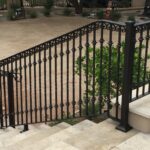
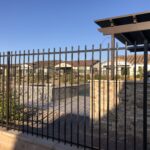
Fence Pros of Arizona offers mesh pool fencing and iron pool fencing, giving homeowners different options to discuss for their layout and preferences. Share your plans early—even if you’re still deciding on the patio—so the fence can be considered alongside the rest of the project.
A little coordination now can make the finished backyard feel much more thoughtfully put together.
Planning a backyard upgrade? Call Fence Pros of Arizona at 623-209-8505 to discuss your pool fence before construction begins.